Fall Prevention for Elderly: 12 Evidence-Based Strategies
Every 11 seconds, an older adult is treated in an emergency room for a fall. Every 19 minutes, one dies. Falls are the leading cause of injury-related death among adults over 65 in the United States, and the numbers are getting worse. Between 2007 and 2016, fall death rates among older adults increased by 30%, according to the Centers for Disease Control and Prevention. The total annual cost of fall injuries now exceeds $50 billion in direct medical expenses alone.
But here is what most people do not realize: falls are not an inevitable part of aging. They are preventable. A growing body of rigorous clinical research has identified specific, evidence-based strategies that reduce fall risk by up to 50%. This guide covers all twelve, ranked by the strength of their evidence, so you or your loved ones can build a practical fall prevention plan.
The most effective fall prevention strategy for elderly adults is regular Tai Chi practice, which reduces fall rates by 31-50% according to a meta-analysis of 18 randomized controlled trials. Other evidence-based strategies include home safety modifications, medication reviews, vision checks, and progressive balance training. The CDC recommends at least 150 minutes of moderate exercise per week for fall prevention.
The Scale of the Problem: Falls in America
The statistics on falls among older adults are staggering, and they reveal a public health crisis that does not receive the attention it deserves. According to the CDC's 2024 data, approximately 36 million falls are reported among older adults each year. Of those, 8.4 million result in injuries, and approximately 38,000 are fatal. That makes falls the number one cause of traumatic brain injury and the most common cause of hip fractures in the elderly population.
The financial burden is equally alarming. Medicare and Medicaid shoulder roughly 75% of the $50 billion annual cost. The average hospital stay for a fall-related hip fracture costs $30,000 to $40,000, and that does not include rehabilitation, home modifications, or long-term care that often follows. A 2023 analysis in the Journal of the American Medical Association estimated that the true economic impact, including lost productivity and reduced quality of life, exceeds $100 billion annually.
Perhaps most concerning is the underreporting problem. Research published in Age and Ageing found that fewer than half of older adults who fall tell their doctor about it. The reasons vary: embarrassment, fear of losing independence, or the assumption that falling is simply part of getting older. This silence means that risk factors go unaddressed, and the next fall becomes more likely, not less.
The good news is that falls are not random events. They result from identifiable risk factors, and those risk factors can be modified. Understanding why falls happen is the first step toward preventing them.
Why Do Older Adults Fall? Understanding Risk Factors
Falls rarely have a single cause. Research consistently shows that falls result from the interaction of multiple risk factors, which clinicians categorize as intrinsic (related to the person) and extrinsic (related to the environment).
Intrinsic Risk Factors
Muscle weakness is the single strongest predictor of falls. A 2022 study in The Lancet found that adults with lower-extremity weakness were 4.4 times more likely to fall than those with adequate strength. Age-related muscle loss, called sarcopenia, begins as early as age 30 and accelerates after 60, with adults losing 3-8% of muscle mass per decade.
Balance and gait disorders affect roughly 35% of adults over 65. The vestibular system, which governs balance through the inner ear, degrades with age. Proprioception, the body's ability to sense its position in space, also declines. Together, these changes make it harder to recover from a stumble or navigate uneven surfaces.
Medications are an often-overlooked risk factor. Sedatives, antidepressants, blood pressure medications, and antihistamines can all cause dizziness, drowsiness, or orthostatic hypotension (a sudden drop in blood pressure upon standing). A meta-analysis in JAMA Internal Medicine found that adults taking four or more medications had a 2.5-fold increase in fall risk. The risk increases further with psychoactive medications.
Vision impairment doubles fall risk. Cataracts, glaucoma, macular degeneration, and even outdated prescriptions can compromise depth perception and contrast sensitivity, making it difficult to see curbs, stairs, or obstacles.
Chronic conditions including diabetes, arthritis, Parkinson's disease, and stroke all increase fall risk through various mechanisms, from peripheral neuropathy to joint stiffness to cognitive impairment.
Extrinsic Risk Factors
Home hazards account for approximately 60% of falls. Loose rugs, poor lighting, cluttered walkways, lack of grab bars, and slippery surfaces are the most common culprits. The National Institute on Aging reports that the bathroom is the most dangerous room in the house for older adults.
Footwear matters more than most people realize. Shoes with slick soles, high heels, or loose fit increase fall risk. Even walking in socks on hardwood floors is a significant hazard. Research from Harvard Medical School recommends shoes with low heels, non-slip soles, and firm support.
Understanding these risk factors makes clear that effective fall prevention requires a multi-pronged approach. No single intervention addresses all the contributing factors, which is why the following twelve strategies work best in combination.
12 Evidence-Based Fall Prevention Strategies
The following strategies are ranked by the strength of their evidence, based on systematic reviews and meta-analyses published in peer-reviewed journals. Each includes the level of evidence supporting it.
1. Tai Chi (Evidence Level: Strong)
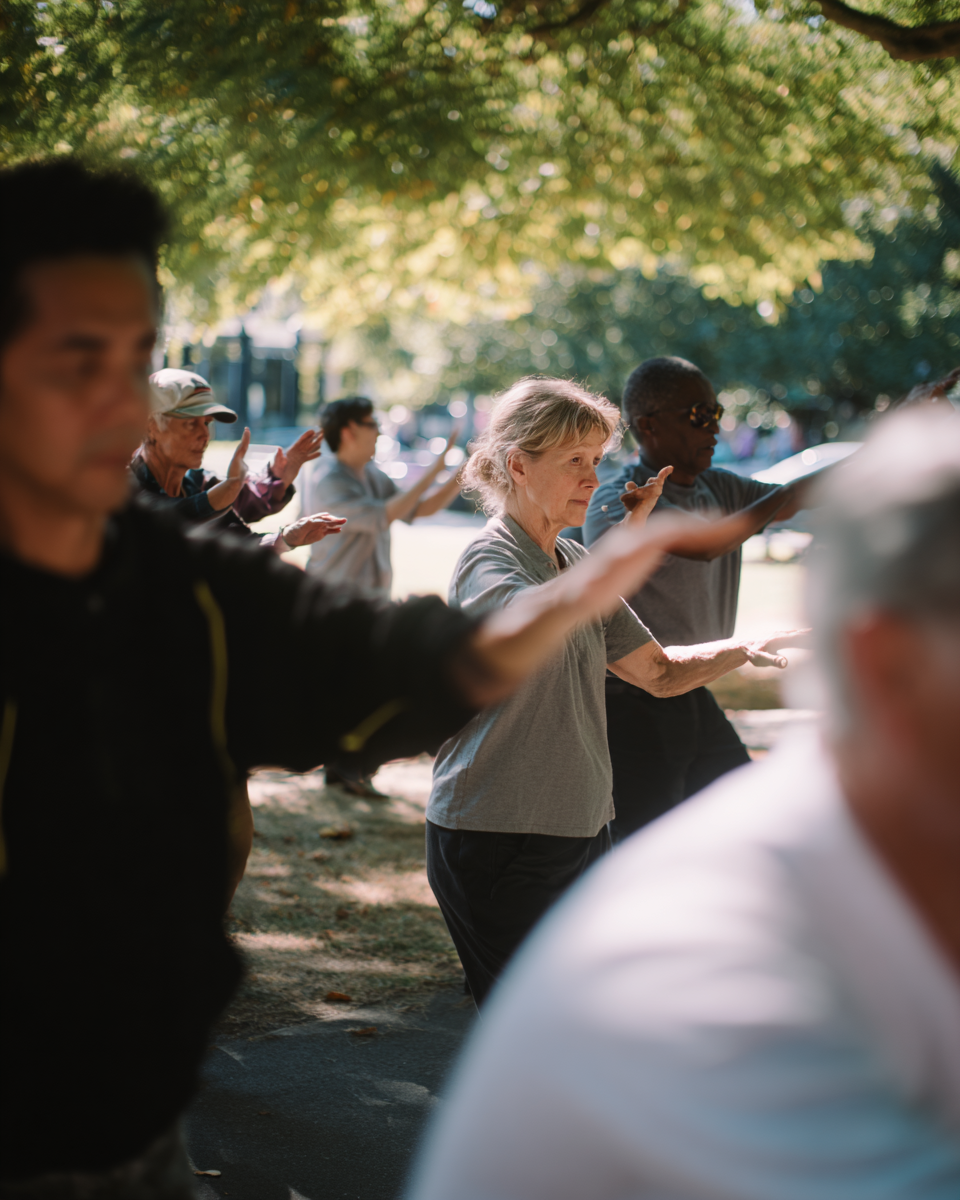
Tai Chi is the single most studied and most effective exercise intervention for fall prevention. A 2023 meta-analysis in BMJ Open reviewed 18 randomized controlled trials involving 3,824 participants and found that Tai Chi reduced fall rates by 31-50% compared to control groups. The CDC's STEADI (Stopping Elderly Accidents, Deaths, and Injuries) initiative specifically recommends Tai Chi as a fall prevention intervention.
Why is Tai Chi so effective? It simultaneously trains three critical systems: proprioception (body awareness in space), vestibular function (inner ear balance), and visual processing. The slow, deliberate weight shifts challenge dynamic balance in a safe, controlled way. And unlike many exercise programs, Tai Chi requires no equipment and can be practiced at any fitness level.
2. Progressive Strength Training (Evidence Level: Strong)
Targeted lower-body strength training reduces fall risk by 20-30%. The most effective programs focus on leg press, hip abduction, and ankle plantarflexion exercises performed 2-3 times per week. A Cochrane review of 108 trials found that exercise programs including strength training reduced the rate of falls by 23%.
3. Balance-Specific Exercise Programs (Evidence Level: Strong)
Programs such as the Otago Exercise Programme, which combines balance training with strength exercises, have been shown in multiple trials to reduce falls by 35%. The key is progressive difficulty: exercises must become more challenging over time to continue improving balance.
4. Home Safety Modifications (Evidence Level: Strong)
Professional home safety assessments followed by modifications reduce falls by 26%, according to a Cochrane review. Key modifications include installing grab bars in bathrooms, improving lighting throughout the home, removing tripping hazards, adding non-slip mats, and installing handrails on all stairs. When combined with occupational therapy guidance, the effect size increases to 39%.
5. Medication Review (Evidence Level: Strong)
A comprehensive medication review by a pharmacist or geriatrician, with reduction or elimination of fall-risk-increasing drugs, reduces falls by approximately 24%. The American Geriatrics Society recommends annual medication reviews for all adults over 65, with specific attention to psychoactive medications, cardiovascular drugs, and polypharmacy (taking five or more medications).
6. Vision Correction (Evidence Level: Moderate)
Annual comprehensive eye exams with prompt treatment of vision problems reduce fall risk. A study in The BMJ found that cataract surgery alone reduced fall rates by 34%. Clinicians also recommend avoiding multifocal lenses when walking, as they can impair depth perception on stairs.
7. Vitamin D Supplementation (Evidence Level: Moderate)
For adults with vitamin D deficiency (below 20 ng/mL), supplementation of 800-1000 IU daily reduces falls by approximately 20%. A meta-analysis in The BMJ found the benefit is most pronounced in adults who are deficient at baseline, particularly those in northern latitudes or with limited sun exposure.
8. Proper Footwear (Evidence Level: Moderate)
Replacing unsafe footwear with well-fitting shoes that have low heels, non-slip soles, and adequate support reduces indoor and outdoor fall risk. Research from the University of Sydney found that a footwear intervention program reduced falls by 36% in a randomized trial.
9. Assistive Devices (Evidence Level: Moderate)
Proper use of canes, walkers, or rollators, when prescribed and fitted by a physical therapist, helps maintain stability. The key word is "proper": an incorrectly sized walker or a cane used on the wrong side can actually increase fall risk.
10. Adequate Hydration and Nutrition (Evidence Level: Moderate)
Dehydration causes dizziness and confusion, both of which increase fall risk. Older adults often have diminished thirst sensation and may not drink enough water. Adequate protein intake (1.0-1.2 g/kg body weight) supports muscle maintenance and reduces sarcopenia-related fall risk.
11. Blood Pressure Management (Evidence Level: Moderate)
Orthostatic hypotension, a drop in blood pressure upon standing, affects up to 30% of adults over 65 and is a common cause of falls. Management includes medication adjustment, adequate hydration, compression stockings, and techniques like clenching the thighs before standing.
12. Regular Health Check-ups (Evidence Level: Moderate)
Annual comprehensive geriatric assessments that screen for fall risk factors can identify problems before they lead to falls. The assessment should include gait and balance testing, medication review, vision screening, cognitive assessment, and foot examination.
The Best Exercise for Fall Prevention: Why Tai Chi Leads the Evidence
Among the twelve strategies listed above, exercise interventions have the strongest and most consistent evidence base. But not all exercise is equally effective for fall prevention. Head-to-head comparisons consistently place Tai Chi at the top.
A landmark 2017 study published in JAMA Internal Medicine compared Tai Chi directly against conventional physical therapy exercises in 670 adults over 70. The Tai Chi group experienced 58% fewer falls than the stretching control group and 31% fewer falls than the multimodal exercise group. Importantly, the benefits increased with practice duration: participants who practiced Tai Chi for more than 24 weeks showed greater fall reductions than those who practiced for shorter periods.
What makes Tai Chi uniquely effective? Research points to several mechanisms. First, Tai Chi involves continuous weight shifting between legs, which trains dynamic balance, the ability to maintain stability during movement. This is more functional than static balance exercises because most falls occur while moving, not while standing still.
Second, Tai Chi engages what neuroscientists call "dual-task processing," performing cognitive and motor tasks simultaneously. Remembering the sequence of movements while executing them trains the brain to allocate attention effectively, which is critical because many falls occur when older adults are distracted while walking.
Third, a 2021 study in Frontiers in Neuroscience found that Tai Chi practitioners showed increased gray matter volume in brain regions associated with balance and spatial navigation. This suggests that Tai Chi does not just train muscles; it changes the brain in ways that support better balance long-term.
Finally, Tai Chi has a critical practical advantage: adherence. A systematic review in Archives of Gerontology and Geriatrics found that Tai Chi programs had significantly higher long-term adherence rates than conventional exercise programs. The social, meditative, and low-impact nature of the practice makes people want to continue, and an exercise program only works if people stick with it.
Creating a Personal Fall Prevention Plan
Knowing the evidence is only useful if you translate it into action. Here is a practical framework for creating a personalized fall prevention plan for yourself or a loved one.
Step 1: Assess Your Risk
Start with an honest self-assessment. The CDC's STEADI toolkit includes a simple 12-question screening that anyone can complete at home. Key questions include:
- Have you fallen in the past year?
- Do you feel unsteady when standing or walking?
- Do you worry about falling?
- Do you take four or more medications?
- Have you had your vision checked in the past year?
- Do you use an assistive device?
If you answer yes to two or more of these questions, you are at elevated risk and should discuss fall prevention with your doctor.
Step 2: Address the Quick Wins
Some interventions require minimal effort and can be implemented immediately. Schedule a vision exam. Request a medication review from your pharmacist. Remove loose rugs from your home. Install nightlights in hallways and bathrooms. These changes cost little and can be done within a week.
Step 3: Start an Exercise Program
Begin with a program that matches your current fitness level. For most older adults, Tai Chi is an excellent starting point because it requires no equipment, can be modified for any ability level, and addresses balance, strength, and cognitive function simultaneously. Look for community-based programs, which provide both instruction and social support.
Step 4: Schedule Professional Assessments
Ask your primary care physician for a comprehensive fall risk assessment. If indicated, request referrals to a physical therapist for gait and balance evaluation, an occupational therapist for a home safety assessment, and an ophthalmologist for a comprehensive eye exam.
Step 5: Build a Support System
Fall prevention is most effective when it involves family members and caregivers. Share your plan with loved ones, practice exercises together when possible, and establish regular check-in routines.
Technology and Fall Prevention: What Actually Works
The market is flooded with fall-related technology, from wearable alert buttons to smart home sensors. But which technologies actually help prevent falls, as opposed to just detecting them after they happen?
Fall Detection vs. Fall Prevention
Most fall technology focuses on detection, alerting someone after a fall has occurred. Medical alert systems like Life Alert, Apple Watch fall detection, and smart home motion sensors serve this purpose. They are valuable, especially for older adults who live alone, but they do not reduce the likelihood of falling in the first place.
True fall prevention technology is less common but growing. The most promising category is technology that makes evidence-based exercise more accessible and adherent. Apps that guide balance exercises, track progress over time, and connect users with communities of practice address the biggest challenge in fall prevention: getting people to exercise consistently.
The Wearable Gap
One notable barrier with many technology solutions is the requirement for additional devices. Research from the Pew Research Center shows that while 61% of adults over 65 own a smartphone, wearable adoption among this demographic remains below 20%. Requiring an additional device creates friction that reduces adherence, particularly among the populations most at risk for falls.
Camera-based movement tracking, which uses a standard smartphone camera to analyze movement quality without requiring a wearable device, represents a promising approach. Apps like Kelo use on-device AI to provide real-time form feedback during Tai Chi practice, making it possible to track balance improvement over time using technology people already own. Because the processing happens on the device itself, there are no privacy concerns about video being uploaded or stored.
What to Look For
When evaluating fall prevention technology, ask these questions: Does it help prevent falls, or just detect them? Does it require additional devices that may create barriers? Does it support evidence-based exercise programs? Does it track progress in meaningful ways? And does it respect your privacy?
Resources and Next Steps
Fall prevention is a journey, not a one-time fix. Here are practical resources to help you or your loved ones take the next step.
Talk to Your Doctor
If you are over 65, or care for someone who is, bring up fall prevention at your next medical appointment. Ask specifically about the CDC's STEADI protocol, which provides a structured framework for fall risk assessment and intervention planning.
Find a Physical Therapist
Physical therapists who specialize in geriatric care or vestibular rehabilitation can provide personalized balance and strength training programs. The American Physical Therapy Association (APTA) maintains a directory at moveforwardpt.com.
Join a Community Program
Community-based fall prevention programs are available in most areas. Many senior centers, YMCAs, and Area Agencies on Aging offer evidence-based programs like Tai Chi: Moving for Better Balance, Stepping On, and A Matter of Balance. Kelo offers free weekly Tai Chi sessions in parks across the United States, designed specifically for multigenerational participation. These sessions require no prior experience and are led by trained facilitators.
Download the CDC's STEADI Resources
The CDC's STEADI initiative provides free resources for both individuals and healthcare providers at cdc.gov/steadi. Materials include risk assessment checklists, educational brochures, and clinical decision tools.
Start Today
The most important step in fall prevention is the first one. Whether it is removing a loose rug, scheduling an eye exam, or attending a community Tai Chi session, every action you take reduces risk. The evidence is clear: falls are preventable, and the strategies that prevent them are accessible to everyone.