Fall Prevention: 12 Things That Actually Help
Falls are not one thing going wrong. They are several small things lining up: a weak leg, a new medication, a dim hallway, a rug with a curled edge. That is also the good news, because each of those is something you can go and change this week.
This guide covers why falls happen, twelve things that address the causes, and how to turn them into a plan you will actually follow.
Why falls happen
Falls rarely have a single cause. Clinicians sort the contributing factors into two groups: intrinsic, meaning something about the body, and extrinsic, meaning something about the surroundings. Most real falls are one of each arriving at the same moment.
Intrinsic factors
Leg strength. Getting out of a chair, climbing a curb and catching yourself after a stumble are all leg-strength problems. Strength declines gradually and quietly, which is why it is usually the last thing anyone thinks to check.
Balance and gait. The inner ear system that governs balance changes over time, and so does proprioception, the body's sense of where its own parts are. Together those changes make it harder to recover from a trip or to cross uneven ground.
Medications. Sedatives, antidepressants, blood pressure medications and antihistamines can all cause dizziness, drowsiness, or a drop in blood pressure when you stand up. The risk is about the combination, not any one prescription, which is why a review beats guessing.
Vision. Cataracts, glaucoma, macular degeneration and an out-of-date prescription all compromise depth perception and contrast, and curbs and stair edges are exactly the things that need contrast.
Chronic conditions. Diabetes, arthritis, Parkinson's disease and stroke each affect balance through their own mechanism, from nerve sensation in the feet to joint stiffness.
Extrinsic factors
The home. Loose rugs, poor lighting, cluttered walkways, missing grab bars and slippery surfaces. The bathroom is the usual first fix, because it puts water, hard surfaces and movements that need a hand free in the same small room.
Footwear. Slick soles, high heels and a loose fit all raise risk, and so do socks on a hardwood floor. Low heel, non-slip sole, firm support.
Twelve things that help
These work in combination, not in isolation, because the causes arrive in combination.
1. Balance-and-movement practice
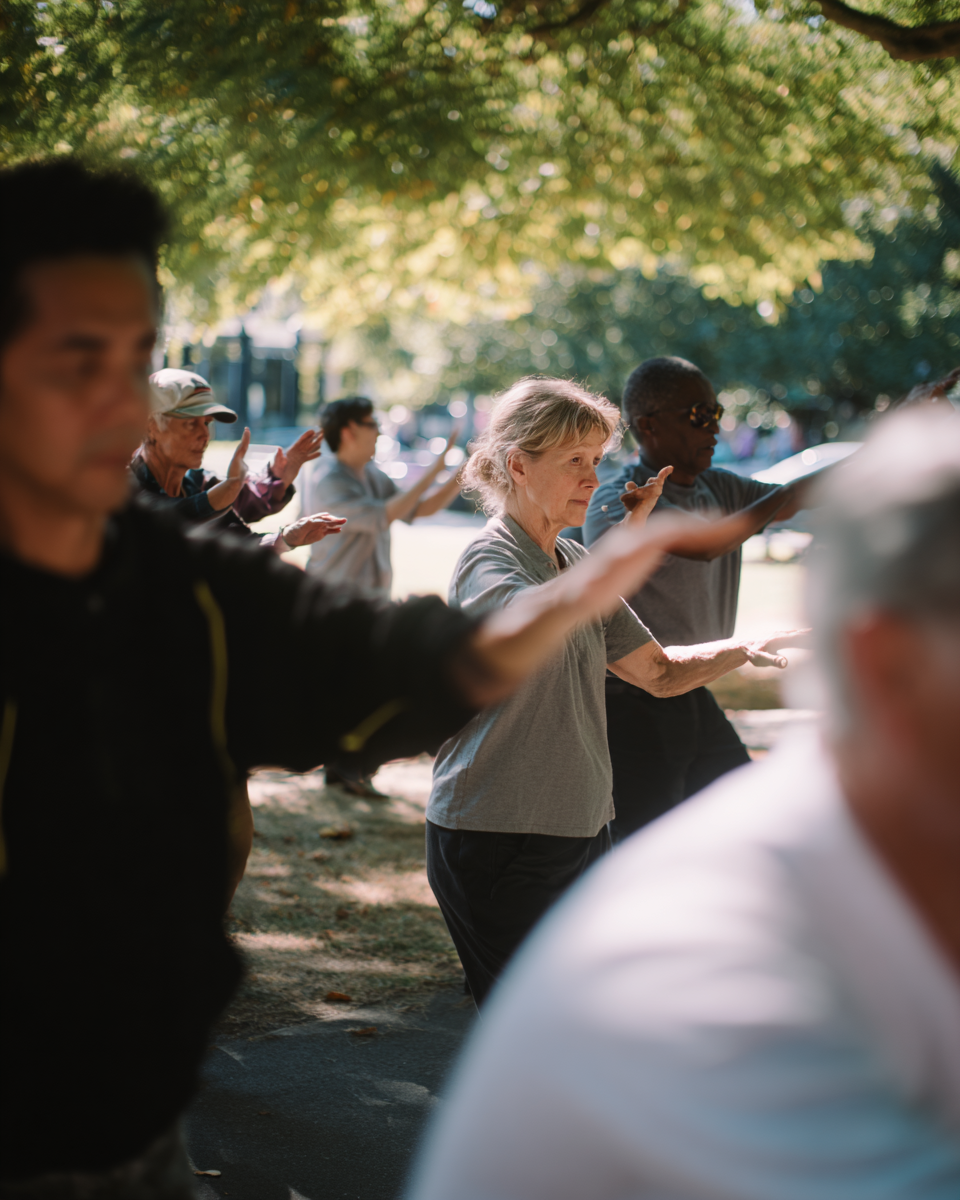
The National Institute on Aging names tai chi among the practices that pair balance with attention, and says they can build strength and help prevent falls and fall-related fractures. Tai chi trains balance the way you actually use it: shifting weight while moving, rather than holding still.
2. Lower-body strength training
Two or three sessions a week, focused on the muscles that stand you up and hold you sideways: legs, hips and ankles. A physical therapist can set the starting load so that the first week does not become the last week.
3. A progressive balance program
Balance work only keeps helping if it keeps getting harder. Any program worth doing has a next step built into it, whether that is a narrower stance, a longer hold or one less hand on the counter.
4. Home safety changes
Grab bars in the bathroom, brighter light everywhere, tripping hazards gone, non-slip mats, handrails on both sides of the stairs. An occupational therapist will spot things a resident has stopped seeing.
5. A medication review
Ask a pharmacist or physician to review everything you take, prescription and over the counter, specifically for effects on balance and blood pressure. Bring the actual bottles.
6. An eye exam
Annual, comprehensive, with the prescription updated. One question worth bringing: if you wear multifocal lenses, ask your eye doctor whether they change what you see on a staircase.
7. Vitamin D, if your level calls for it
This one is a blood test and a conversation with a clinician, not a shelf decision. Ask whether your level warrants supplementation and at what dose.
8. Better footwear
Well-fitting shoes with a low heel, a non-slip sole and real support, worn indoors as well as out. This is the cheapest item on the list and the one most often skipped.
9. The right assistive device, fitted
Canes, walkers and rollators help when a physical therapist prescribes and sizes them. A cane held on the wrong side or a walker set too high makes things worse, so fitting is the whole point.
10. Hydration and protein
Dehydration causes dizziness and confusion, and thirst is an unreliable signal. Enough protein supports the muscle you are trying to build in items 1 through 3.
11. Blood pressure on standing
A drop in blood pressure when you stand up is a common and very fixable cause of falls. Management can include adjusting a medication, drinking more, compression stockings, and simply standing up in two stages instead of one.
12. A yearly check that includes balance
Ask for gait and balance testing, a medication review, vision screening and a foot exam as part of an annual appointment. Those five together are the screen.
What the CDC recommends clinicians do
The CDC runs a fall prevention program for health care providers called STEADI, and its structure is worth borrowing even if you are not a clinician. STEADI has three steps: screen for fall risk, assess which specific factors are driving it, and intervene with something tailored to the person rather than generic advice.
The patient and caregiver materials are free to download. Printing the screening questions and bringing them to an appointment turns a vague worry into a specific conversation, which is the whole trick.
Building your own plan
Step 1: Screen
These are the questions worth answering honestly before the appointment:
- Have you fallen in the past year?
- Do you feel unsteady when standing or walking?
- Do you worry about falling?
- Are you taking several medications, including anything over the counter?
- Have you had your vision checked in the past year?
- Do you use a cane or walker?
Any of these pointing the wrong way is worth raising with a doctor rather than waiting for the next appointment to come around.
Step 2: Take the quick wins
Schedule the eye exam. Ask the pharmacist for the medication review. Take up the loose rugs. Put nightlights in the hallway and the bathroom. All four fit in a week and none of them need anyone's permission.
Step 3: Start moving, in company
Pick something you can get to on a fixed day, because the schedule is the active ingredient. Tai chi is a common starting point: it asks only for room to stand, every movement scales to you, and it works balance, strength and attention in the same hour. Group programs add the part a printout cannot, which is other people expecting you.
Step 4: Get the professional assessments
Ask your primary care physician for a fall risk assessment. Where it is indicated, that leads to a physical therapist for gait and balance, an occupational therapist for the home, and an eye doctor for the prescription.
Step 5: Tell someone
Share the plan with family. Practice together when you can. Set a standing check-in. A stumble is easy to not mention, and a plan someone else knows about is much harder to quietly drop.
Technology: detection is not prevention
Most fall technology detects falls. Alert buttons, watch-based fall detection and home motion sensors all shorten the time between a fall and help arriving, which genuinely matters for anyone living alone. None of them makes the fall less likely.
Prevention technology is the smaller category: anything that makes an evidence-backed exercise habit easier to keep. When you evaluate a product, the useful questions are whether it prevents or only detects, whether it needs an extra device you will have to remember to charge, whether it supports a real program rather than a generic routine, and what it does with your data.
Where to go next
Raise it at your next appointment. Ask about STEADI by name. It gives the conversation a structure, and most clinicians already know it.
Find a physical therapist. Therapists who work on balance and vestibular rehabilitation build these programs for a living. The American Physical Therapy Association keeps a public directory.
Join something local. Parks departments, community centers and YMCAs run balance and tai chi programs, often free or close to it. Kelo runs weekly Qigong sessions in Los Angeles parks, set to live electronic music, open to any age and any level. Turn up on the day.
Read the source material. The CDC's STEADI resources and the NIA's falls guidance, both linked above, are free and are written for people, not just clinicians.
Pick one item off this list today. The rug takes four minutes.